Signed in as:
filler@godaddy.com


Electrical stimulation has become an important tool in rehabilitation, including the rehabilitation of swallowing.
But there is an important distinction that is sometimes overlooked:
Neuromuscular Electrical Stimulation (NMES) and Functional Electrical Stimulation (FES) are not necessarily distinguished by the stimulation parameters themselves. The critical distinction is how the stimulation is incorporated into the patient's activity.
This distinction became especially clear to me through discussions at the IFESS conference and prompted an important reconsideration of the terminology we have traditionally used to describe the Biber Protocol®.
The stimulation used in the protocol can accurately be described as NMES because the electrical stimulation is used to activate peripheral nerves and produce a motor response.
However, when that stimulation is deliberately synchronized with the patient's performance of the functional task being rehabilitated, a more specific description is appropriate:
Functional Electrical Stimulation (FES).
And in swallowing rehabilitation, that distinction matters.

Swallowing rehabilitation provides an excellent example.
If the goal is to improve swallowing, then the ultimate functional activity is not simply contraction of the swallowing musculature.
The goal is swallowing.
Therefore, stimulation can be incorporated directly into the swallowing task.
This is the fundamental concept behind the Biber Protocol®.
During the stimulation cycle, the patient remains actively engaged and intentionally performs the swallowing action.
The patient is not simply receiving electrical stimulation while resting.
Instead:
Stimulation + Active Swallowing = Functional Swallowing Practice
With the Biber Protocol®, the patient is taught to coordinate the swallow with the stimulation cycle:
One intentional swallow with stimulation ON during each cycle.
The stimulation and the patient's voluntary effort are therefore deliberately paired.
This creates repeated opportunities for the nervous system to experience the relationship between:
electrical activation + voluntary effort + sensory feedback + functional movement
The functional task remains at the center of the intervention.
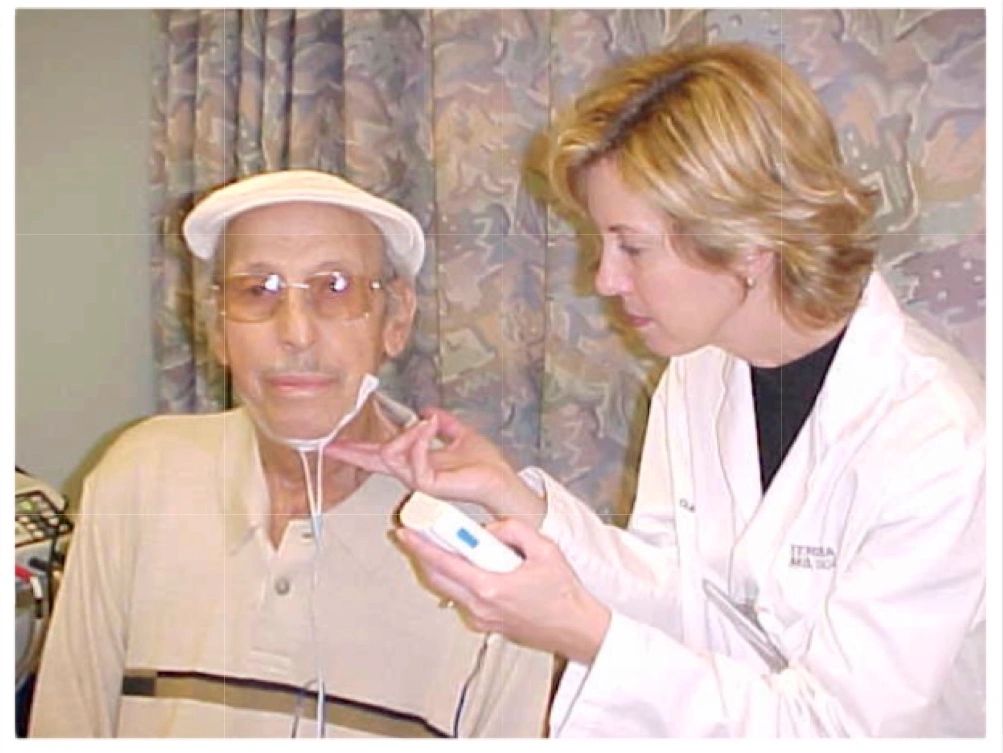
The Biber Protocol® has always emphasized active patient participation.
The patient is instructed to swallow simultaneously with the stimulation cycle, using a distinct one-swallow-per-cycle approach.
This is an important feature of the protocol because the stimulation is not intended to replace the patient's effort.
The patient actively attempts the swallow while the stimulation is being delivered.
The electrical stimulation provides additional neuromuscular and sensory input while the patient engages in the functional task.
In this context, describing the intervention as Functional Electrical Stimulation (FES) more accurately communicates the functional nature of the approach.
The stimulation is being used within the function, rather than simply around it.
Rehabilitation is more than simply activating a muscle.
The nervous system is constantly receiving information about what the body is doing, what the individual is attempting to do, and what happens as a result.
When stimulation is paired with voluntary activity, the patient is simultaneously receiving multiple sources of information:
When these inputs are repeatedly and appropriately associated, they may contribute to activity-dependent neuroplasticity—the nervous system's ability to adapt in response to repeated experience and practice.
This distinction changes the question we ask.
If we are only asking:
“Can we make the muscle contract?”
we are primarily addressing muscle activation.
But if we ask:
“Can we use that activation while the patient performs the function we are trying to restore?”
we are addressing functional rehabilitation.
For swallowing, that means the swallow itself should remain an active component of the therapeutic process.
The target is not simply contraction.
The target is function.
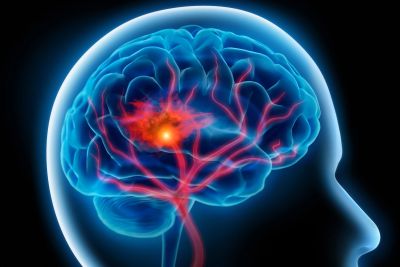
Modern rehabilitation increasingly recognizes that successful recovery involves more than the muscle itself.
The muscle is part of a larger system involving:
brain → nerves → muscles → sensory feedback → movement → function
Effective rehabilitation seeks to engage that entire system.
For swallowing, the desired outcome is not simply improved muscle contraction.
It is the ability to perform a coordinated, effective swallow.
That is why the integration of stimulation, voluntary effort, sensory input, timing, and functional activity deserves careful consideration.
Perhaps the simplest way to explain the evolution in terminology is this:
NMES describes the neuromuscular stimulation.
FES describes how that stimulation is used functionally.
The two are not competing technologies.
Rather, FES can be understood as a functional application of electrical stimulation in which the stimulation is integrated with the movement or task the patient is trying to perform.
That distinction helps us communicate more precisely with clinicians, researchers, patients, and families.
And most importantly, it keeps the focus where it belongs:
On restoring function.
The terminology may seem like a small detail.
But it provides an opportunity to clarify something fundamental about rehabilitation:
We do not rehabilitate muscles simply for the sake of muscles.
We rehabilitate movement so that people can function.
And when electrical stimulation is deliberately paired with the functional action we want to restore, the stimulation becomes part of that functional practice.
For swallowing rehabilitation, that means keeping the swallow itself at the center of the intervention.
Stimulation + Active Swallowing = Functional Recovery of Swallowing
That is the goal.